
Start a San Bruno Residents Directory Search
San Bruno publishes no master resident roll. The city, San Mateo County, the Superior Court, the state, and the library each keep a different slice of local life. Start from the strongest fact in hand. An address points to parcel and permit records. A current name may lead to a deed party. It might also surface in a court index or a professional license record. An older household belongs with the library's Polk volumes, newspapers, census schedules, and local history files. Treating a title record, a voter registration, and a directory listing as proof of the same thing is a common mistake.
So work the sources in order. Keep a short log. Record the search terms, dates, parcel number, and custodian, since each step builds a better key for the next one.
- Search the county GIS or property gateway by address or APN, then record the parcel and situs details.
- Use the assessor or RecorderWorks result to separate an ownership clue from a residence clue.
- Check the Superior Court index, vital-record route, or state license search when the question concerns one named person.
- For a past household, compare the library's 1950, 1953, 1955, and 1959 Polk volumes with newspapers and the released 1950 census.
- Ask San Bruno or the county custodian for an existing record when no public index supplies the needed date or document.
Note: A resident directory search becomes more reliable when every conclusion carries its source, date, and record type.
Where San Bruno Resident Records Live
San Mateo County's ACRE office bundles the Assessor, County Clerk-Recorder, and Elections divisions under one roof. Each division still does different work. The Recorder files deeds, liens, maps, and other recorded instruments, while the Assessor ties each parcel to assessment and mailing facts. The Clerk issues vital records and keeps named filings. Elections controls qualified voter-file access. San Bruno's City Clerk is the municipal custodian. The Superior Court is a separate state trial court. Even so, its Redwood City records counter sits at County Center.
For a counter visit, ACRE lists 555 County Center, First Floor, Redwood City, with weekday hours from 8 a.m. to 5 p.m. excluding holidays. Call 650-363-4500 for recorder, vital, and copy questions. Appointments use 650-599-1713; San Bruno City Clerk service sits at 567 El Camino Real, with records requests routed through the municipal office.
San Mateo County Recorder
555 County Center, First Floor
Redwood City, CA 94063
650-363-4500
San Mateo County Assessor
555 County Center, Third Floor
Redwood City, CA 94063
650-363-4500
Property Information Portal
Move From a Name to an Address
A name-first San Bruno residents directory search needs patience. RecorderWorks takes a party type and a name. It also allows partial-name matching and a date range. Even so, a deed party is tied to a recorded instrument, not to whoever lives there now. Names rarely settle anything alone. The assessor's mailing field may point to a trust or an owner at another address. A court index supplies a party role. The case timeline is not proof of residence either. These gaps widen with common names or with a surname spelled several ways in one family.
So use two independent anchors before calling a match one person. A middle initial can pair with a known spouse, an APN, an event date, a business entity number, or a school connection. Then test the address clue twice. Check it against the county map and a city permit record. If the goal becomes everyone along one road, the San Bruno street directory by address workflow keeps the parcel and deed steps together.
- Roll
- A list kept for a defined purpose, such as assessment, registration, or an election file.
- Index
- A finding aid that points to a record. It may omit the document image or later legal status.
- Parcel
- A mapped unit of land identified by an APN. It is a location key, not a household list.
- Criss-cross directory
- A reverse directory organized by address or telephone rather than only by surname. San Bruno's verified local holdings are labeled Polk telephone directories.
San Bruno RecorderWorks Search Fields
The county's RecorderWorks portal offers the sharpest current name trail for recorded instruments. Its online party-name indexing runs from 1985 forward. A known document number or recording date can still retrieve earlier instruments. Pre-1985 name research needs the counter. The Recorder's index books cover those years. The portal's help text hints at an older cutoff in one place, but the live range and stated name coverage make 1985 the safe boundary.
| Mode | Fields and use |
|---|---|
| Name | Party type, name text up to 100 characters, partial-name option, and From and To dates in MM/DD/YYYY format. |
| Document number | From number is required; To number is optional and the field allows up to 11 characters. |
| Book and page | Book or volume is required; the first page narrows the result. |
| Recording date | Both dates are required for a date-range query. |
| Document type | Date pair plus one or more types, including deeds, liens, maps, releases, and court orders. |
Write down the document number, recording date, party role, legal description, and page count. The public web display hides property-owner names. Identity-theft protection drives the shield. A search may then need a known identifier, an office visit, an email, or a copy order. The index proves an instrument was recorded. It says nothing about title, occupancy, or a later release's meaning.
Note: RecorderWorks is a deed and instrument index, not an unrestricted San Bruno residents directory.
San Bruno's Current Directory Sources
Different San Bruno directories answer different questions. The county property gateway locates a parcel and its assessment context. California's authenticated voter tool lets a voter check that voter's own status. A fuller file requires a qualifying statutory purpose. City staff listings name officials in public roles, not private residents. Permits tie a project address to an applicant, a contractor, or an inspection record. Those fields appear when they are public. The table keeps those limits in view.
| Source | What It Lists | Keeper | Access |
|---|---|---|---|
| Property and parcel records | APN, situs, assessment, map layers, and mailing context | San Mateo County ACRE | Free GIS gateway |
| Voter status and file | One voter's status, or qualified voter data under declared purpose | California SOS and San Mateo Elections | Authenticated self-lookup |
| Recorded instruments | Parties to deeds, liens, maps, and releases | County Recorder | Index plus counter or copy route |
| Municipal staff directory | Names and contacts of city officials and employees | San Bruno | Public city directory |
| Permits and project files | Address, project, inspection, and named permit parties | Building Division | Online or city request |
For a one-person question, court, vital, business, license, probate, or obituary records may beat any directory label. Old households need different tools. The printed and digital collections at San Bruno Public Library often fill the gaps left by modern privacy rules. Every source has a purpose. Never stretch a record past its custodian's purpose.
Why San Bruno Voter Lookup Has Boundaries
California runs its My Voter Status page as a self-check, not a browsing tool. It asks for your name and birth date. It also wants a driver license or an ID card. It may take the last four digits of a Social Security number instead. Each field offers an "I do not have" choice. A voter who logs in sees registration status and address. The same screen shows party and language preference. Ballot status, polling place, and election information appear there too. No anonymous visitor can walk a San Bruno street through that form.
A fuller voter file follows a separate path. State law allows qualified access for candidate, ballot-measure, election, scholarly, journalistic, political, and approved governmental purposes. The statewide file request page lists a $100 statewide file. It also lists a $30 specific-voter request capped at $100. Identity, purpose, security, signature, and delivery requirements all apply. San Mateo County publishes its own application and fees. These include a $125 electronic file plus a printed-list charge. Elections Code sections 2188, 2194, and 18109 draw the boundary around voter lookup data. Their regulations do the same.
Historical work takes yet another route. The San Bruno Library keeps a sealed 1908 precinct register, supplemented through July 1909. That supervised source is not permission to turn current election data into a casual resident list.
San Bruno Historical Directory Shelf
Some of the best people-history leads sit outside modern directory systems. The San Bruno History Collection describes a WWII-era Honor Roll. It lists local names, addresses, and family members from roughly 1941 through 1945. The Victory War Album of San Bruno and Lomita Park adds service-member context. A record like that can reconnect a family to an address. It can identify a relative named in a newspaper story. It can also supply a spelling variant for a later court or vital-index search.
The same collection holds five school yearbook groups. These include The Crest from 1962-1969, PTA and club scrapbooks, oral histories, local newspapers, and the four verified Polk telephone volumes. None of these replaces a current San Bruno residents directory. The San Bruno city directory collections page keeps dates, catalog limits, and library-access details in one place. Each source is a supervised clue. It shows who appeared in a community record at one moment.
The San Bruno History Collection page states that most material is library use only. Staff retrieve items from storage at the Reference Desk. A library card or photo ID is held during viewing. Appointments are appreciated, and copying depends on a fee, staff handling, and item condition.
Official Rolls Versus Private Compilations
A San Bruno residents directory search often drifts toward private compilation sites. Typing a name feels effortless. Those services blend public, licensed, and commercial inputs. They charge for details and can carry stale or merged profiles. A lead is a lead. Still, no compilation replaces the source office. A county deed index, court docket, or state license result has a named custodian and a defined record type. It also offers a path to request a correction.
| Question | Official record | Private compilation |
|---|---|---|
| Who controls it? | Named city, county, court, library, or state custodian | Commercial operator with mixed source inputs |
| What can it prove? | Only the event, field, or role recorded by that system | Usually a lead that needs source verification |
| How is an error fixed? | Ask the originating custodian to correct or explain its record | Operator removal may not fix the public source |
| What is the access limit? | Statute, sealing, redaction, fee, or supervised access | Terms, paywalls, stale data, and uncertain provenance |
Trust official channels for the final word. A deed confirms a recorded title transaction, yet it names no occupant. A directory listing shows a subscriber, not the whole household. Draw the narrowest accurate conclusion and stay safest.
San Bruno Records That Stay Protected
California access law opens many records. But it does not turn every name or address into a public lookup. Health and Safety Code sections 103525-103526 split certified copies into authorized and informational types. An informational birth, death, or marriage copy carries a legend and cannot establish identity. Confidential marriage records go only to spouses or by court order. Family Code section 9200 and related rules seal adoption files and original birth certificates.
The Superior Court's online index shows case numbers, party names, category, and filing date. It also lists some docket material. Remote access narrows for family, criminal, juvenile, mental-health, adoption, sealed, and confidential files. A courthouse terminal can provide lawful access that anonymous online viewing cannot. A docket is still a timeline. It is not a finding of guilt or proof of present residence.
Privacy boundary. Safe at Home provides substitute address and mail-forwarding services for eligible participants. Do not try to defeat a protected address or infer a hidden household from a public parcel.
Request Missing San Bruno Records
When a city record is not posted, the San Bruno Public Records Request route is the answer. The city form asks for the department, a description of existing records, and a choice. You can review records at City Hall, or you can receive copies. A focused request names the address or APN, permit or project number, date range, department, and preferred format. The California Attorney General's CPRA guidance explains the framework, now Government Code sections 7920.000-7931.000. An agency generally has ten calendar days to determine whether responsive disclosable records exist. Unusual circumstances allow a possible fourteen-day extension. That window sets a determination deadline, not a guaranteed production date.
Ask for records, not a new answer or a custom list. The city can redact private contact information, juvenile material, active-investigation material, and other exempt content. It still releases segregable portions. County and court custodians use their own forms. ACRE mail requests need the parties, document type, recording date, document number, page count, payment, and return envelope. Superior Court mail requests require a case number, party names, and approximate filing date. They also require a document description, and a self-addressed envelope.
Note: A narrow date and address range helps a custodian find an existing record without turning the request into a new data project.
San Bruno's Record-Keeping Eras
San Mateo County took shape on April 19, 1856. San Bruno followed with incorporation on December 23, 1914. Library holdings preserve material from both sides of that divide. The layers run deep: a 1908-1909 precinct register, Water Commission papers from 1920-1924, Health Board records spanning 1926-1939, Library Commission files from 1943-1957, the San Bruno Herald from 1920-2004, and clipping files reaching from 1938 to 2007. Together they sketch a rich local record history.
Modern records have their own cutoffs. RecorderWorks dates party-name indexing to 1985. The Superior Court lobby provides filed documents and dates for cases filed after 2000. Older or off-site files may require staff retrieval. Electronic property tools help. Yet they do not replace the paper indexes, maps, and historical newspapers an earlier address demands. A San Bruno residents directory search that crosses these eras works best when each date boundary is labeled. Folding them into one continuous database does not serve the search well.
| Era or source | What the transition means |
|---|---|
| 1908-1909 | Precinct affidavits provide a controlled historical registration snapshot. |
| 1920-2007 | Herald issues and clipping files provide names, notices, and address clues with incomplete runs possible. |
| 1985 onward | RecorderWorks supports party-name searching for recorded instruments. |
| After 2000 | Superior Court public computers expose an index and permitted documents, with remote limits. |
A San Bruno Invoice Warning
Scams reach into records work. On August 23, 2024, San Bruno warned about an email from an unknown sender. It falsely sought city-fee payment. The lesson is simple. A message naming a parcel, permit, fee, or relative can still be a scam. Never reply through the message itself. Instead, open the municipal gateway on your own. Call the department through a published city number. Or visit the custodian before any money or personal information changes hands.
The same habit protects family-history research. Search California's Controller database directly before paying anyone to locate unclaimed property. Check a deed-copy request against the County Recorder's own fee and mailing instructions. Treat an urgent obituary-based payment request as untrusted until a known family number confirms it. Suspected consumer scams can go to the California Attorney General consumer portal. They can also go to an FTC fraud report. Careful work protects the researcher and the person named in a record alike.
Safe check. Save the message, do not click its links, and contact San Bruno Police at 650-616-7100 for a non-emergency report. Call 911 only for immediate danger.
San Bruno Directory Research Gateways
These official gateways open different doors in a San Bruno residents directory search. The county GIS gateway starts with parcel geography. The city and county pages lead to custodians, forms, and local context. Each one is a starting point. None promises that every name or document is visible online.
The county's property and court tools help most in some cases. A search that begins with an address or a recorded event gets the most from them.
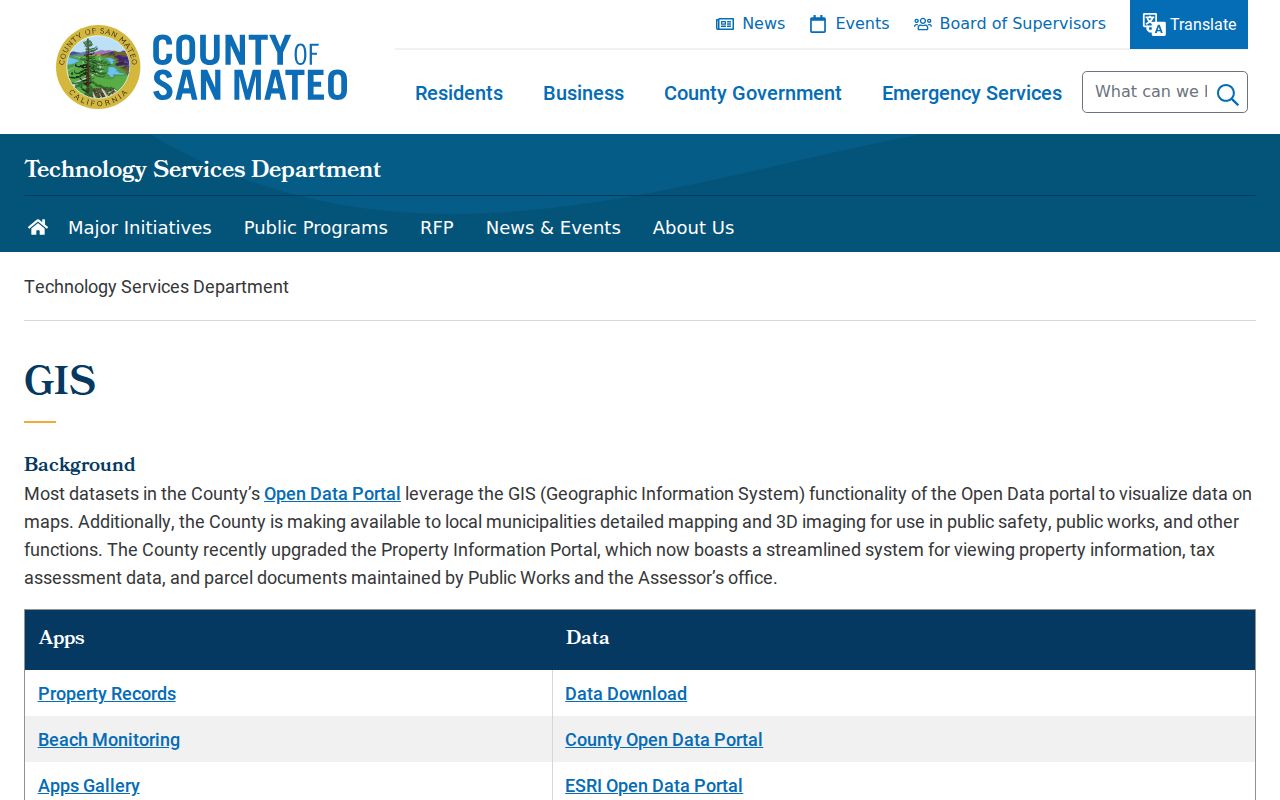
The map gateway layers parcel, city, ZIP, precinct, zoning, survey, and district data into one location key. The San Mateo Superior Court access page covers the separate court route for case names and documents.
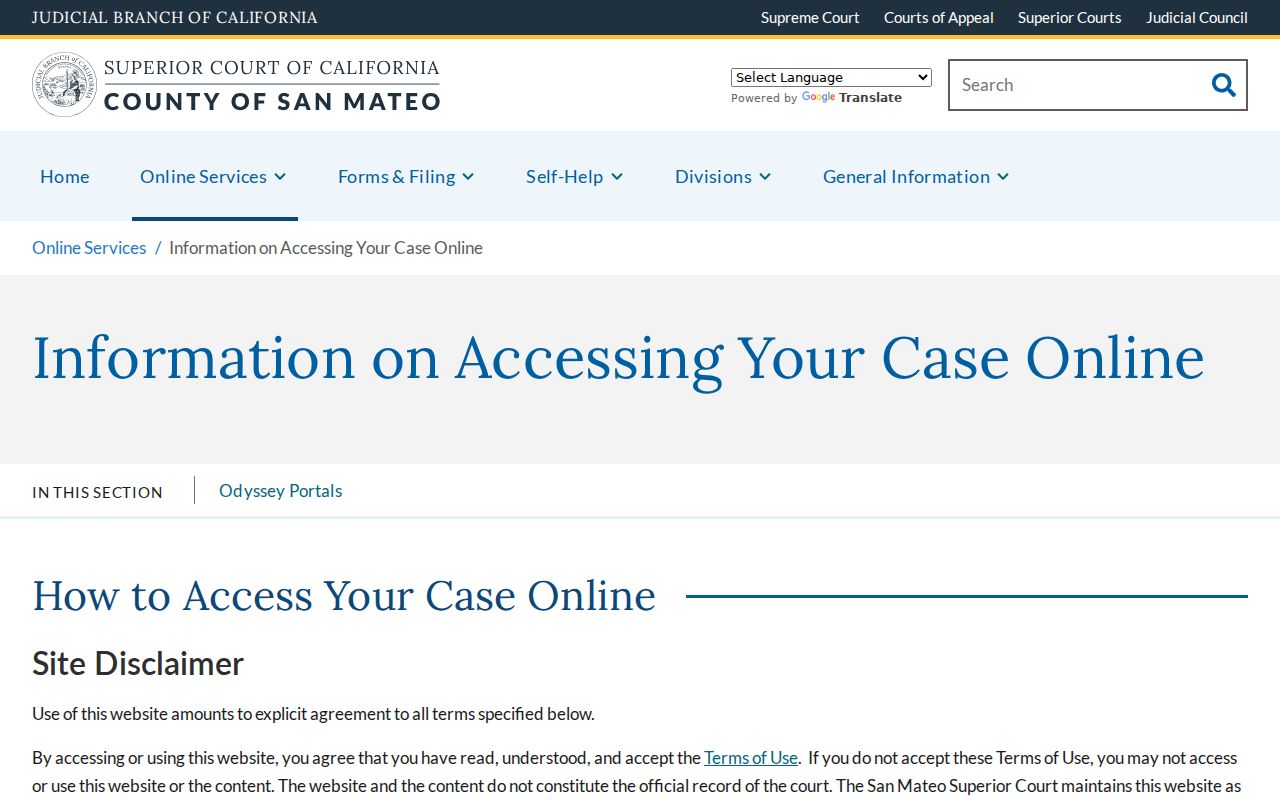
A court result can add a party role and a date. The file and disposition still need careful reading.
The San Bruno municipal gateway keeps city agendas, departments, and local request paths together for San Bruno records work.
City records are strongest for municipal actions, permits, and other files San Bruno itself holds.
The San Bruno staff directory is a public directory of officials and employees acting in official roles.
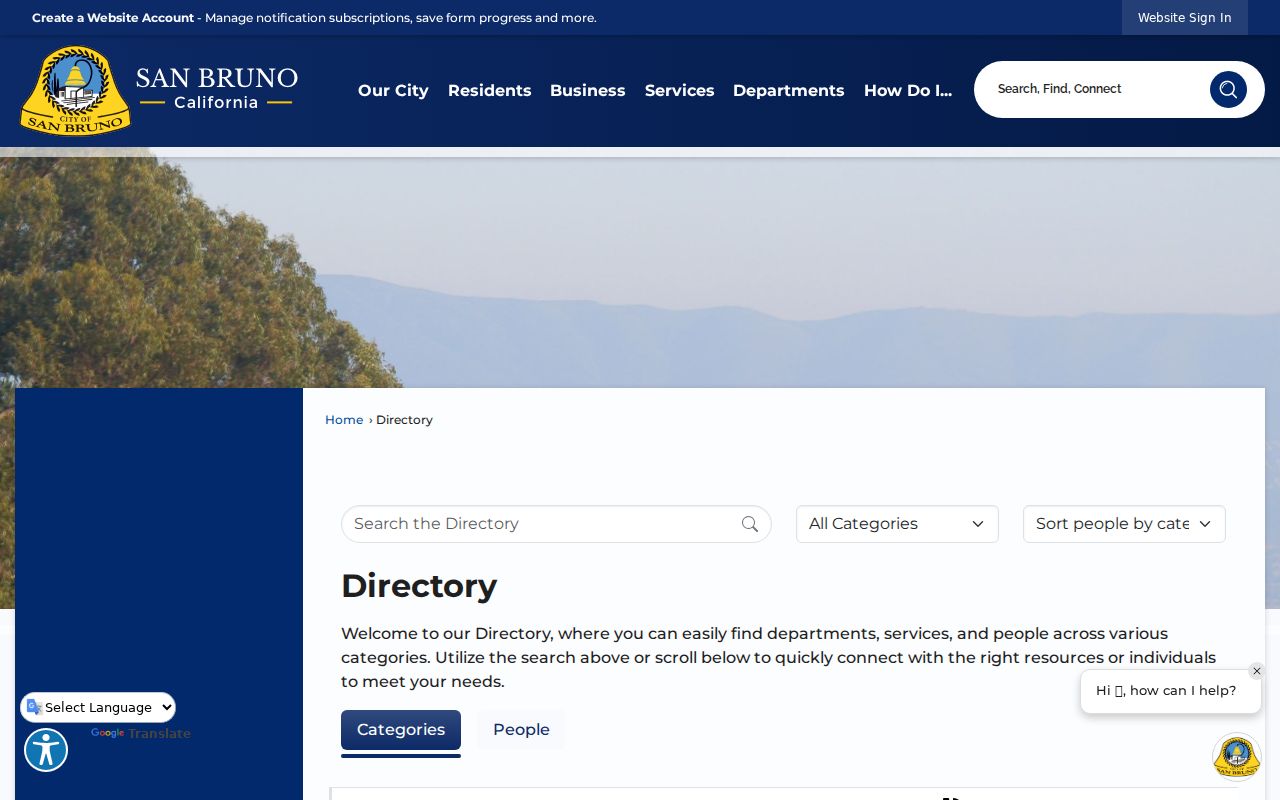
It helps identify the right department. It is not a general list of San Bruno residents.
The county recorder and clerk page is the source for recorded-document, vital-record, and named-filing instructions.
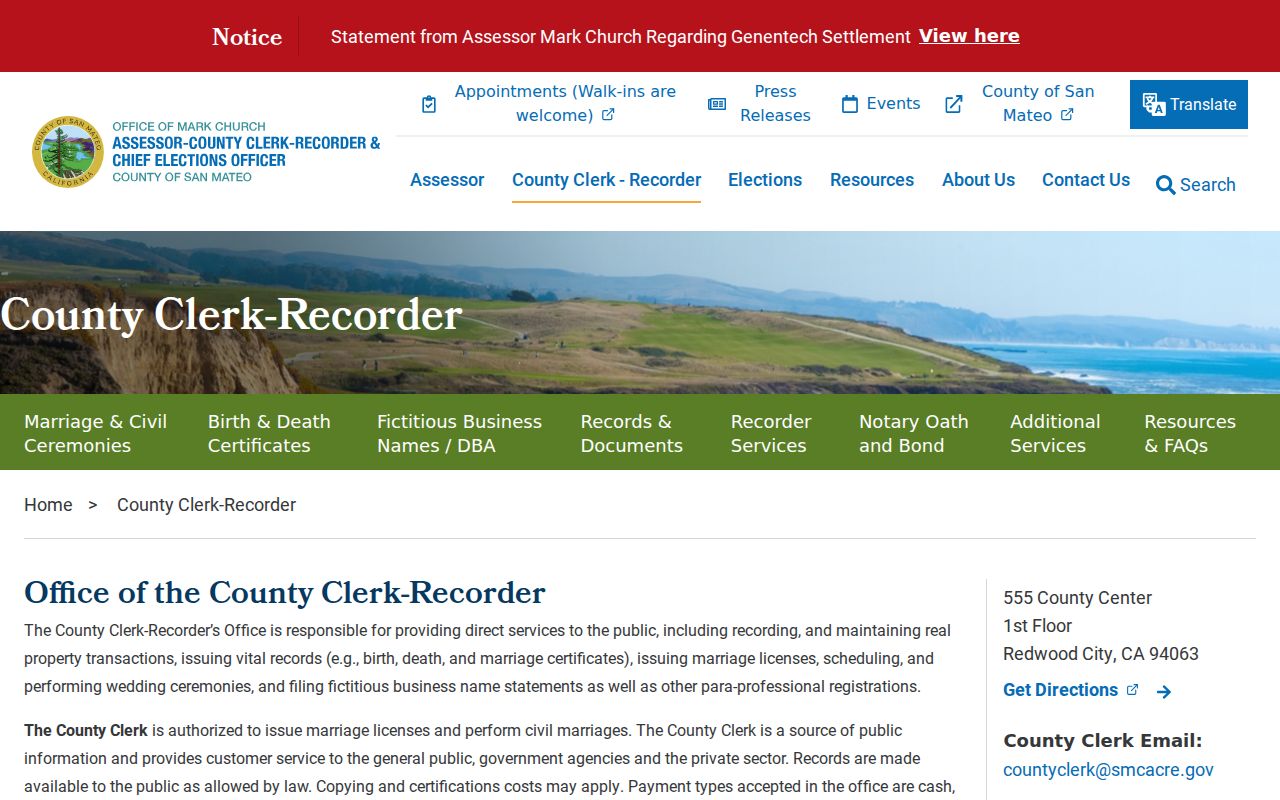
Office instructions bridge the gap between an online index and a counter inspection or a copy request with proper identification. The California self-service voter screen shows why a voter lookup starts with authentication rather than street browsing.
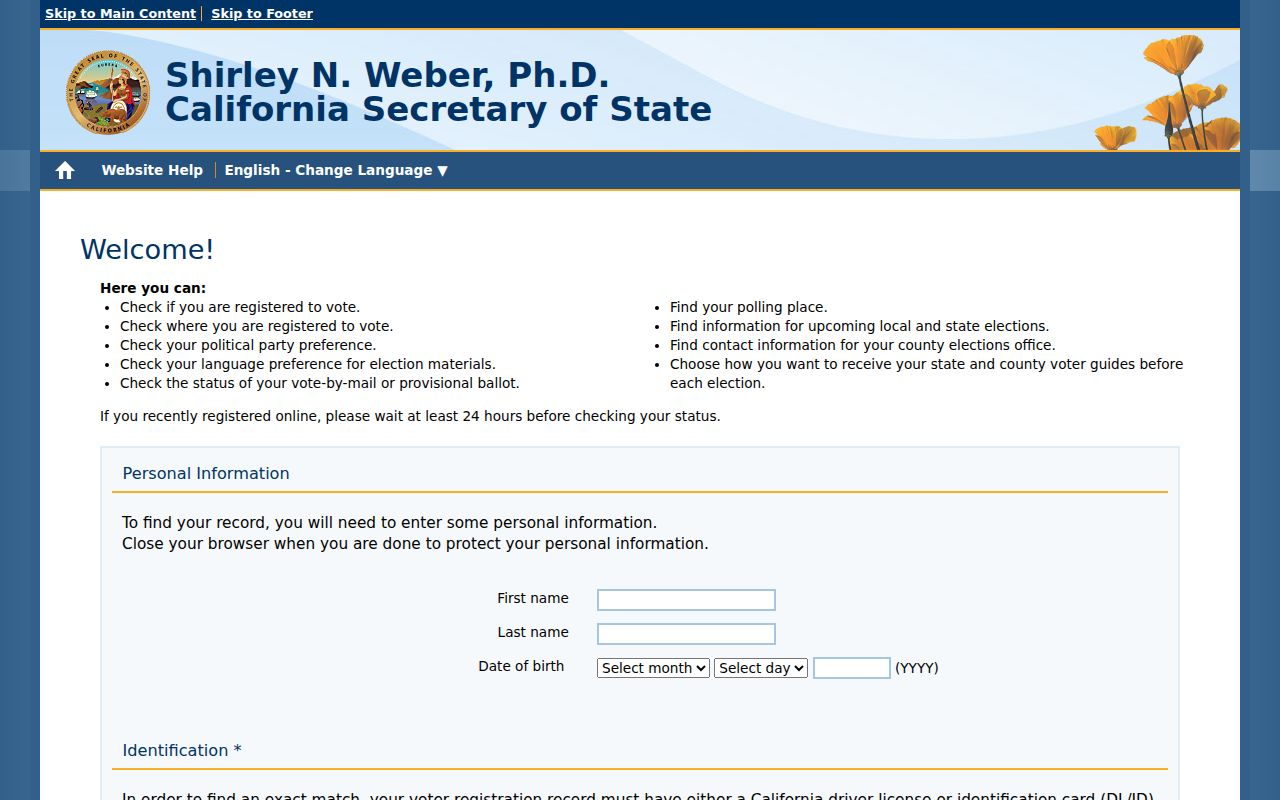
The returned status, address, and election details belong to the authenticated voter and the permitted service, and the California voter-file request instructions show the separate qualified-purpose path.
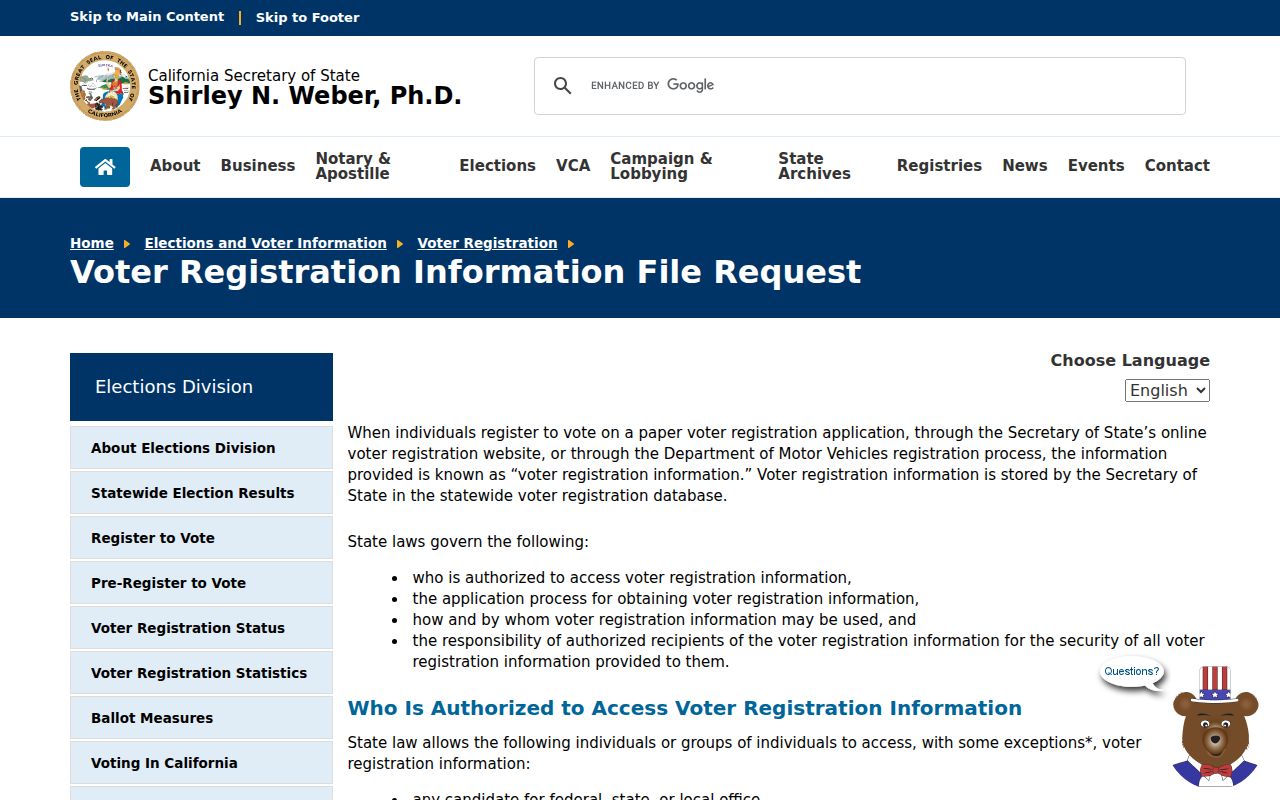
Purpose, identity, security, fee, and delivery requirements are part of the record access decision.