
Start a San Bruno Residents Directory Search
San Bruno has no master resident roll. The city, San Mateo County, the Superior Court, the state, and the library each preserve a different slice of local life. Start with the strongest fact already in hand. An address points toward the county parcel map and the city permit trail. A current name may lead to a deed party, a court index, or a professional license. An older household belongs in the library's Polk volumes, newspapers, census schedules, and local history files. That choice prevents a common mistake: treating a title record, a voter registration, and a directory listing as if they proved the same thing.
Use the following order when a first search produces only a partial answer. Keep the search terms, dates, parcel number, and record custodian in a short log. Each step creates a better key for the next one.
- Search the county GIS or property gateway by address or APN, then record the parcel and situs details.
- Use the assessor or RecorderWorks result to separate an ownership clue from a residence clue.
- Check the Superior Court index, vital-record route, or state license search when the question concerns one named person.
- For a past household, compare the library's 1950, 1953, 1955, and 1959 Polk volumes with newspapers and the released 1950 census.
- Ask San Bruno or the county custodian for an existing record when no public index supplies the needed date or document.
Note: A resident directory search becomes more reliable when every conclusion carries its source, date, and record type.
Where San Bruno Resident Records Live
San Mateo County ACRE combines the Assessor, County Clerk-Recorder, and Elections functions, but those divisions do different work. The Recorder handles deeds, liens, maps, and other recorded instruments. The Assessor ties parcels to assessment and mailing information. The Clerk issues local vital records and keeps named filings. Elections controls qualified voter-file access. San Bruno's City Clerk is the municipal custodian, and the Superior Court is a separate state trial court even though its Redwood City records counter is also at County Center.
For a counter visit, ACRE lists 555 County Center, First Floor, Redwood City, with weekday hours from 8 a.m. to 5 p.m. excluding holidays. The published contact details include 650-363-4500 for recorder, vital, and copy questions, and 650-599-1713 for appointments. San Bruno City Clerk service is at 567 El Camino Real, with city records requests routed through the municipal office.
San Mateo County Recorder
555 County Center, First Floor
Redwood City, CA 94063
650-363-4500
San Mateo County Assessor
555 County Center, Third Floor
Redwood City, CA 94063
650-363-4500
Property Information Portal
Move From a Name to an Address
A name-first San Bruno residents directory search should not jump straight to a conclusion. RecorderWorks accepts a party type, a name, partial-name permission, and a date range. A deed party is connected to a recorded instrument, not automatically to the people living at the property. The assessor's mailing field may point to an owner or a trust at another location. A court index supplies a party role and case timeline, but a docket entry is not proof of an address. These distinctions matter when names are common or when a family uses several versions of a surname.
Use two independent anchors before treating a match as the same person. A middle initial can pair with a known spouse, an APN, an event date, a business entity number, or a school connection. A current address clue can then be checked against the county map and a city permit record. If the goal changes from a named person to everyone along one road, the San Bruno street directory by address workflow keeps the parcel and deed steps in one place.
- Roll
- A list kept for a defined purpose, such as assessment, registration, or an election file.
- Index
- A finding aid that points to a record. It may omit the document image or later legal status.
- Parcel
- A mapped unit of land identified by an APN. It is a location key, not a household list.
- Criss-cross directory
- A reverse directory organized by address or telephone rather than only by surname. San Bruno's verified local holdings are labeled Polk telephone directories.
San Bruno RecorderWorks Search Fields
San Mateo County's RecorderWorks portal is the most precise current name trail for recorded instruments. Its official inspection showed online party-name indexing from 1985 forward. A known document number or recording date can still help retrieve earlier instruments, while pre-1985 name research goes to the Recorder's counter and index books. The portal's help text mentions an older cutoff in one place, but the live range and stated name coverage support 1985 as the safe boundary.
| Mode | Fields and use |
|---|---|
| Name | Party type, name text up to 100 characters, partial-name option, and From and To dates in MM/DD/YYYY format. |
| Document number | From number is required; To number is optional and the field allows up to 11 characters. |
| Book and page | Book or volume is required; the first page narrows the result. |
| Recording date | Both dates are required for a date-range query. |
| Document type | Date pair plus one or more types, including deeds, liens, maps, releases, and court orders. |
Record the document number, recording date, party role, legal description, and page count. The public web display suppresses property-owner names for identity-theft protection, so a search may require a known identifier, office inspection, email, or copy order. The index establishes that an instrument was recorded. It does not establish current title, occupancy, or the meaning of a later release.
Note: RecorderWorks is a deed and instrument index, not an unrestricted San Bruno residents directory.
San Bruno's Current Directory Sources
Different San Bruno directories answer different questions. The county property gateway can locate a parcel and its assessment context. The authenticated California voter tool lets a voter check that voter's own status, while a fuller file requires a qualifying statutory purpose. City staff listings identify officials acting in public roles, not private residents. Permits connect a project address to an applicant, contractor, or inspection record when those fields are public. The table keeps those limits visible.
| Source | What It Lists | Keeper | Access |
|---|---|---|---|
| Property and parcel records | APN, situs, assessment, map layers, and mailing context | San Mateo County ACRE | Free GIS gateway |
| Voter status and file | One voter's status, or qualified voter data under declared purpose | California SOS and San Mateo Elections | Authenticated self-lookup |
| Recorded instruments | Parties to deeds, liens, maps, and releases | County Recorder | Index plus counter or copy route |
| Municipal staff directory | Names and contacts of city officials and employees | San Bruno | Public city directory |
| Permits and project files | Address, project, inspection, and named permit parties | Building Division | Online or city request |
For a one-person question, court, vital, business, license, probate, or obituary records may be more useful than a directory label. For an old household, the printed and digital collections at San Bruno Public Library often fill the gaps left by modern privacy rules. No source should be expanded beyond the purpose for which its custodian provides it.
Why San Bruno Voter Lookup Has Boundaries
California My Voter Status is an authenticated self-lookup. It asks for first name, last name, date of birth, and a driver license or ID or the last four digits of a Social Security number, with “I do not have” options. A voter can see registration status and address, party and language preference, ballot status, polling place, and election information. An anonymous person cannot browse a San Bruno street through that form.
Qualified access to a fuller file is a separate process. The state permits candidate, ballot-measure, election, scholarly, journalistic, political, and approved governmental purposes. The statewide file request page describes a $100 statewide file and a $30 specific-voter request with a cap of $100, plus identity, purpose, security, signature, and delivery requirements. San Mateo County publishes its own application and fee information, including a $125 electronic file and a printed-list charge. Elections Code sections 2188, 2194, and 18109, with the related regulations, control the boundary.
Historical research has a different path. The San Bruno Library holds a sealed 1908 precinct register with a supplement through July 1909. It is a supervised historical source, not permission to repurpose current election data for a casual resident list.
San Bruno Historical Directory Shelf
A useful human-history lead sits outside the modern directory systems. The San Bruno History Collection describes a WWII-era Honor Roll with local names, addresses, and family members from about 1941 through 1945. The Victory War Album of San Bruno and Lomita Park adds service-member context. Those records can reconnect a family to an address, identify a relative in a newspaper story, or supply a spelling variant for a later court or vital-index search.
The same library collection includes five school yearbook groups, The Crest from 1962-1969, PTA and club scrapbooks, oral histories, local newspapers, and the four verified Polk telephone volumes. These are not interchangeable with a current San Bruno residents directory. The San Bruno city directory collections keep the dates, catalog limits, and library-access details together. These sources are supervised, time-bound clues that explain who appeared in a community record at a particular moment.
The San Bruno History Collection page says most material is library use only. Materials are retrieved from storage at the Reference Desk; a library card or photo ID is held during viewing, appointments are appreciated, and copying depends on a fee, staff handling, and the condition of the item.
Official Rolls Versus Private Compilations
A public San Bruno residents directory search sometimes starts with a private compilation because it is easy to type a name. That kind of service may combine public, licensed, and commercial inputs, charge for details, and retain stale or merged profiles. It can supply a lead, but it cannot replace the source office. A county deed index, court docket, or state license result has a custodian, a record type, and a way to request a correction.
| Question | Official record | Private compilation |
|---|---|---|
| Who controls it? | Named city, county, court, library, or state custodian | Commercial operator with mixed source inputs |
| What can it prove? | Only the event, field, or role recorded by that system | Usually a lead that needs source verification |
| How is an error fixed? | Ask the originating custodian to correct or explain its record | Operator removal may not fix the public source |
| What is the access limit? | Statute, sealing, redaction, fee, or supervised access | Terms, paywalls, stale data, and uncertain provenance |
Use official channels for a final check. A deed can confirm a recorded title transaction, but it does not name every occupant. A directory listing can show a subscriber, but it does not show every person in a household. The narrowest accurate conclusion is usually the safest one.
San Bruno Records That Stay Protected
California access law opens many existing records but does not turn every name or address into a public lookup. California Health and Safety Code sections 103525-103526 distinguish authorized and informational certified copies. An informational birth, death, or marriage copy carries a legend and cannot establish identity. Confidential marriage records are limited to spouses or a court order. Adoption files and original birth certificates are sealed under Family Code section 9200 and related rules.
The Superior Court's online index can show a case number, party names, category, filing date, and some docket material, but remote access is narrower for family, criminal, juvenile, mental-health, adoption, sealed, and confidential files. The courthouse terminal can offer lawful access not available anonymously online, subject to the same legal limits. A court docket is a timeline, not a finding of guilt or present residence.
Privacy boundary. Safe at Home provides substitute address and mail-forwarding services for eligible participants. Do not try to defeat a protected address or infer a hidden household from a public parcel.
Request Missing San Bruno Records
When a city record is not posted, use the San Bruno Public Records Request route. The city form asks for the department, a description of existing records, and a choice between reviewing records at City Hall or receiving copies. A focused request names the address or APN, permit or project number, date range, department, and preferred format. The California Attorney General's CPRA guidance explains the same public-records framework, now Government Code sections 7920.000-7931.000. An agency generally has ten calendar days to determine whether responsive disclosable records exist, with a possible fourteen-day extension for unusual circumstances. That is a determination window, not a guaranteed production date.
Ask for records, not a new answer or a custom list. The city can redact private contact information, juvenile material, active-investigation material, and other exempt content while releasing segregable portions. County and court custodians use their own forms and copy routes. ACRE mail requests need the parties, document type, recording date, document number, page count, payment, and return envelope; Superior Court mail requests need a case number, party names, approximate filing date, document description, and a self-addressed envelope.
Note: A narrow date and address range helps a custodian find an existing record without turning the request into a new data project.
San Bruno's Record-Keeping Eras
San Mateo County formed on April 19, 1856. San Bruno incorporated on December 23, 1914, and its library holdings preserve records from before and after incorporation. The 1908-1909 precinct register, Water Commission papers from 1920-1924, Health Board records from 1926-1939, Library Commission records from 1943-1957, the San Bruno Herald from 1920-2004, and clipping files from 1938-2007 form a layered local record history.
Modern cutoffs are just as important. RecorderWorks states party-name indexing from 1985. The Superior Court lobby supplies filed documents and dates for cases filed after 2000, while older or off-site files may need staff retrieval. The county's electronic property work is useful but does not erase the paper indexes, maps, and historical newspapers needed for earlier addresses. A San Bruno residents directory search that crosses these eras should label each date boundary instead of implying one continuous database.
| Era or source | What the transition means |
|---|---|
| 1908-1909 | Precinct affidavits provide a controlled historical registration snapshot. |
| 1920-2007 | Herald issues and clipping files provide names, notices, and address clues with incomplete runs possible. |
| 1985 onward | RecorderWorks supports party-name searching for recorded instruments. |
| After 2000 | Superior Court public computers expose an index and permitted documents, with remote limits. |
A San Bruno Invoice Warning
On August 23, 2024, San Bruno warned about an email from an unknown sender that falsely sought city-fee payment. That local incident gives a practical rule for records work: a message that names a parcel, permit, fee, or relative can still be a scam. Do not reply through the message. Open the municipal gateway independently, call the department through a published city number, or visit the custodian before sending money or personal information.
The same habit protects family-history research. Search California's Controller database directly before paying someone to locate unclaimed property. Verify a deed-copy request against the County Recorder's own fee and mailing instructions. Treat an urgent obituary-based payment request as untrusted until a known family number confirms it. Report a suspected consumer scam through the California Attorney General consumer portal or FTC fraud report. A careful San Bruno residents directory search protects the researcher as well as the person named in a record.
Safe check. Save the message, do not click its links, and contact San Bruno Police at 650-616-7100 for a non-emergency report. Call 911 only for immediate danger.
San Bruno Directory Research Gateways
These official gateway captures show the different doors in a San Bruno residents directory search. The county GIS gateway begins with parcel geography, while the city and county pages lead to custodians, forms, and local context. Each image is a starting point, not a promise that every name or document is visible online.
The county's property and court tools are especially useful when a search starts with an address or a recorded event.
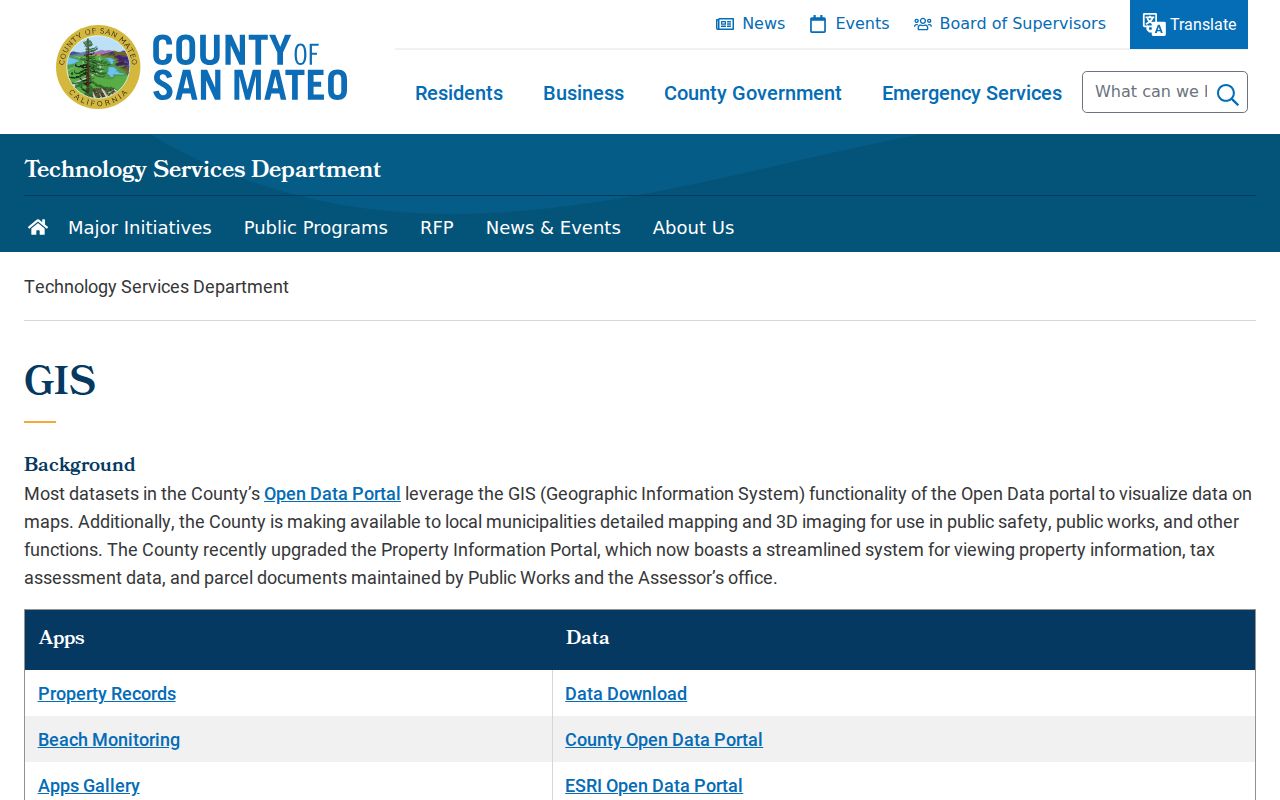
The map gateway supplies the parcel, city, ZIP, precinct, zoning, survey, and district layers used to build a careful location key.
The San Mateo Superior Court access page explains the separate court route for case names and documents.
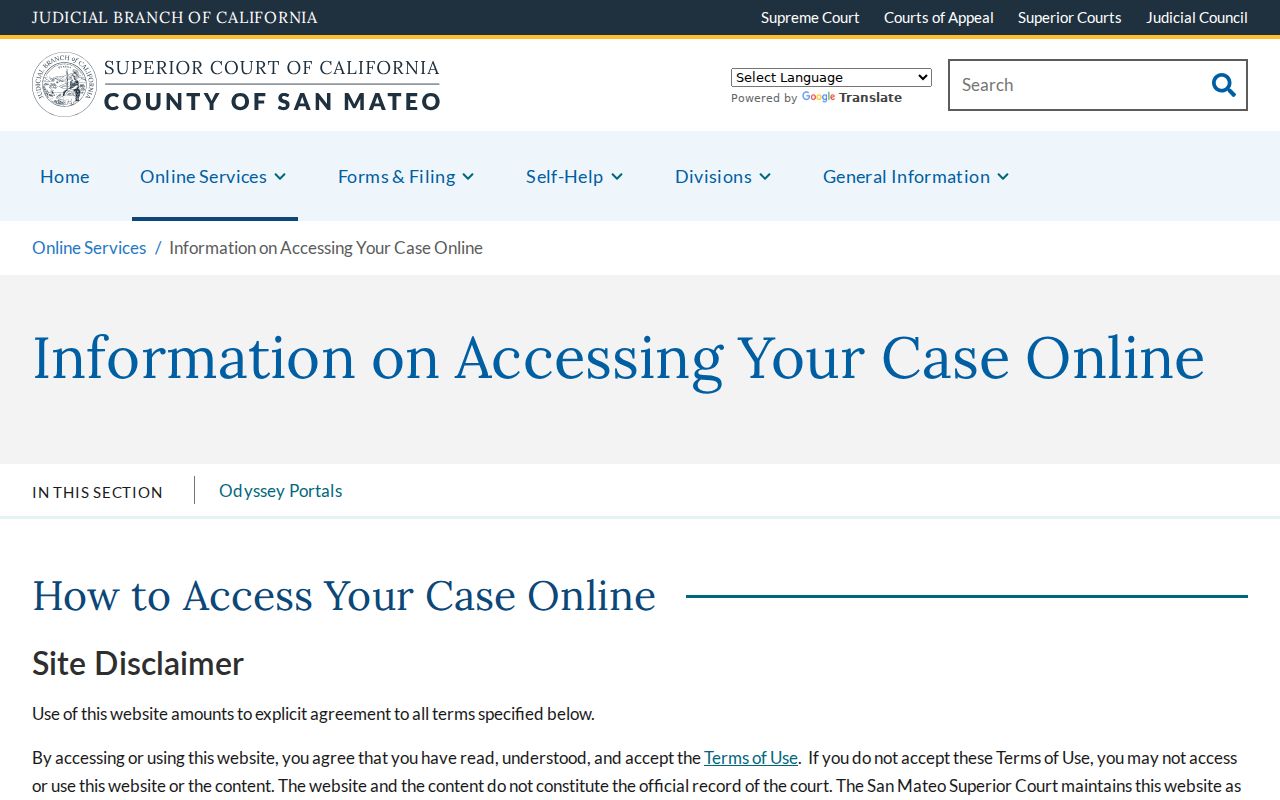
A court result can add a party role and date, but the file and disposition still need careful reading.
The San Bruno municipal gateway keeps city agendas, departments, and local request paths together for San Bruno records work.
City records are strongest for municipal actions, permits, commissions, and other files held by San Bruno itself.
The San Bruno staff directory is a public directory of officials and employees acting in official roles.
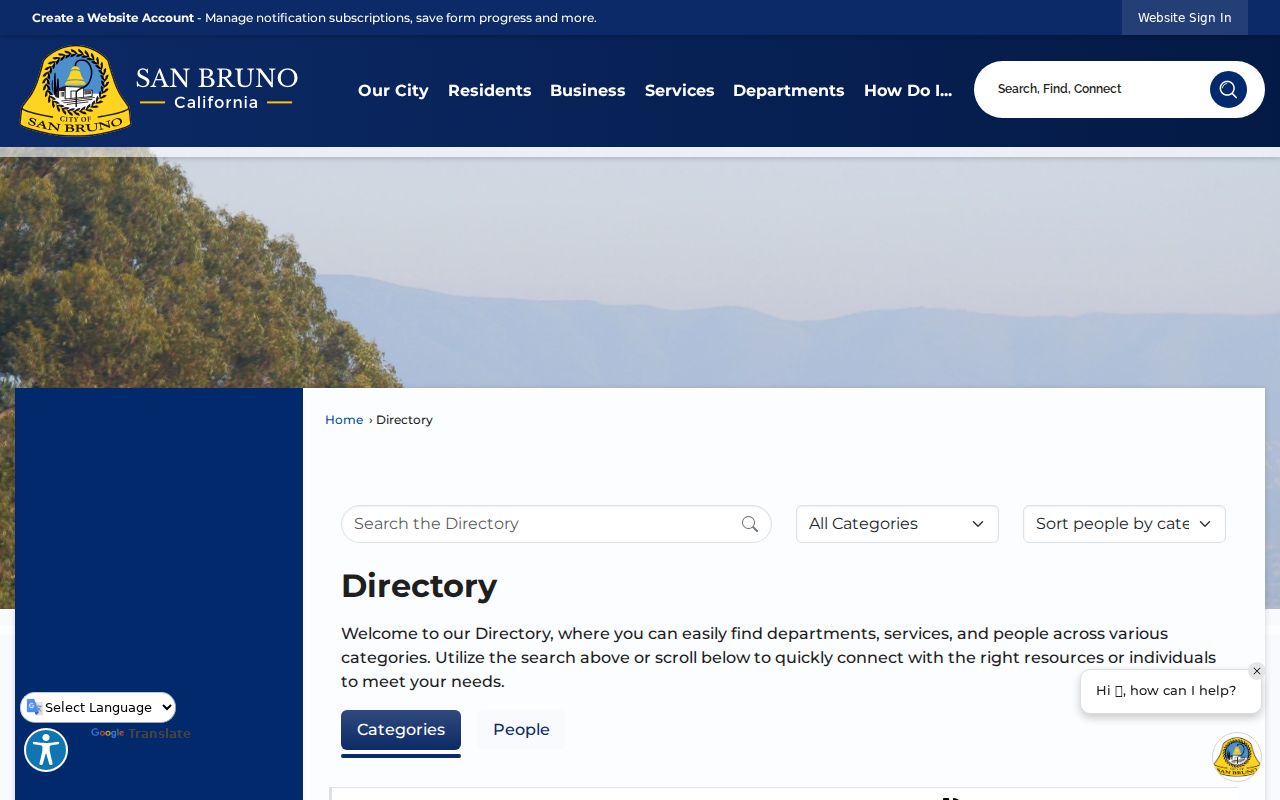
It helps identify the right department, but it is not a general list of San Bruno residents.
The county recorder and clerk page is the source for recorded-document, vital-record, and named-filing instructions.
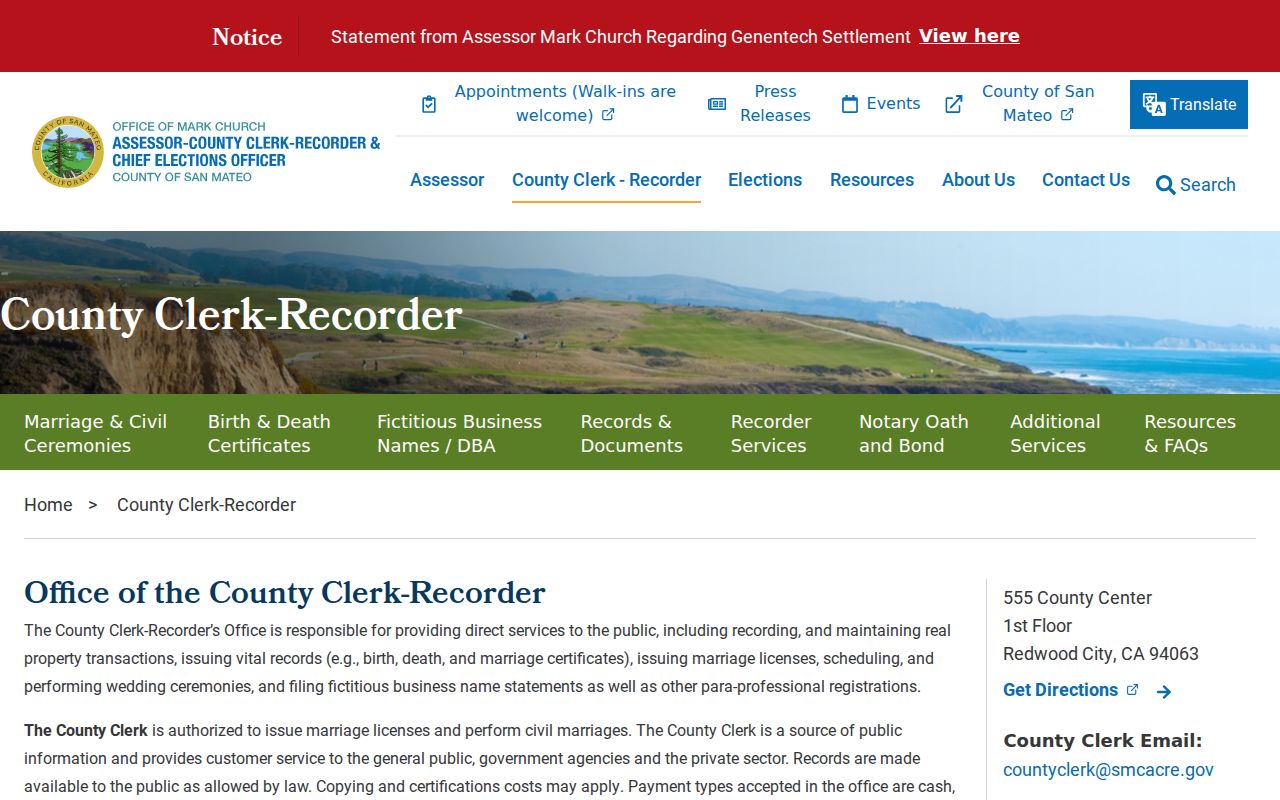
Use the office instructions to bridge an online index to a counter inspection or a properly identified copy request.
The California self-service voter screen shows why a voter lookup begins with authentication rather than street browsing.
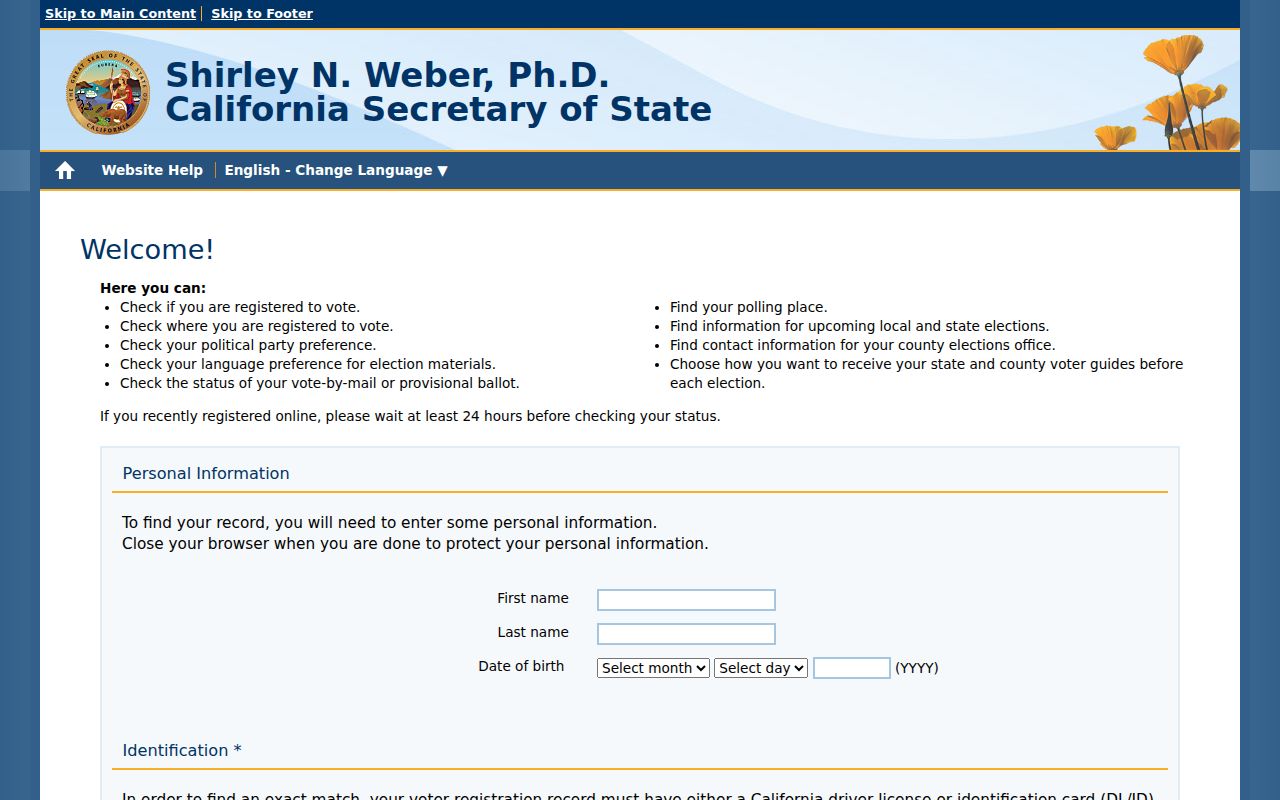
The returned status, address, and election details belong to the authenticated voter and the permitted service.
The California voter-file request instructions show the separate qualified-purpose path.
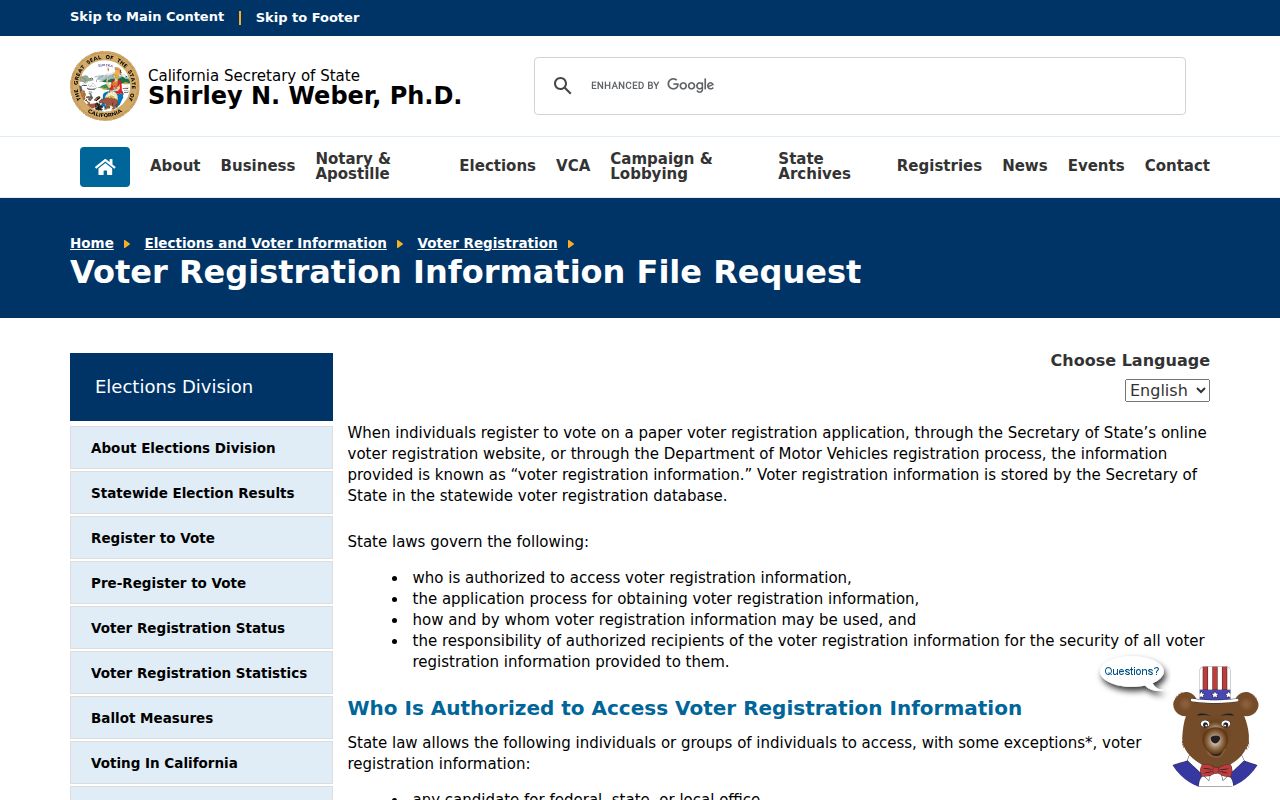
Purpose, identity, security, fee, and delivery requirements are part of the record access decision.